

Tunisia Strengthens Its Commitment to Sustainability Standards
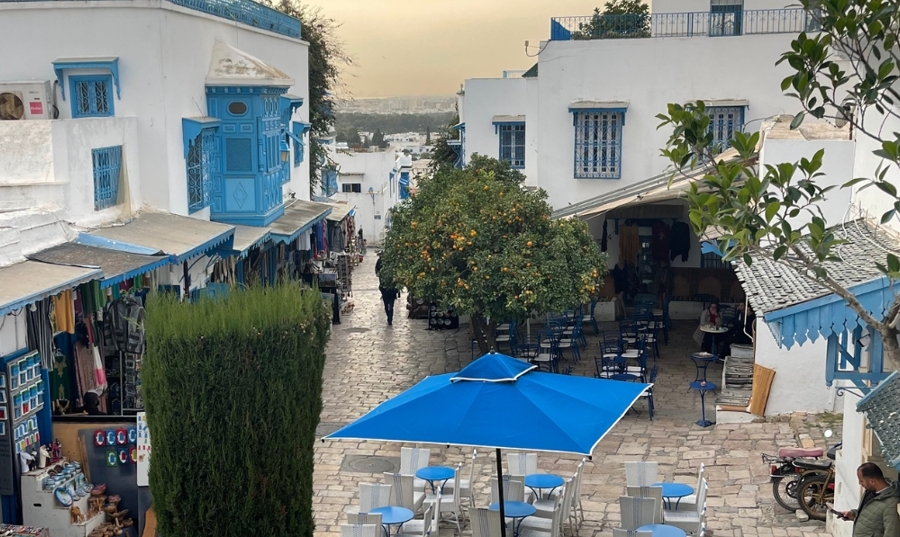 Tunis, Tunisia, June 06, 2026 / TRAVELINDEX / Tunisia has taken a significant step forward in its journey towards a more sustainable, competitive and internationally visible tourism model with the successful launch of Sustainable Tunisia | Human First, a national initiative designed to align the country’s tourism sector with internationally recognised standards of sustainability, quality and certification.
Held in Tunis under the aegis of the Ministry of Tourism and Handicrafts, with the participation of the Tunisian National Tourist Office (ONTT), the Global Sustainable Tourism Council (GSTC), professional federations – FTH, FTAV, FI2T and FTRT – and leading tourism stakeholders, the event marked a first successful milestone in a broader process aimed at moving Tunisia from ambition to structured action.
More than a workshop, Sustainable Tunisia | Human First opened a new national conversation around the future of Tunisian tourism – one that places people, territories, heritage, hospitality, quality and measurable sustainability at the heart of the destination’s development strategy.
The presence of Mr Randy Durband, CEO of the Global Sustainable Tourism Council, gave the initiative a strong international dimension. In his keynote address, dedicated to standards, measurement and verification, Mr Durband underlined the importance of credible frameworks, transparent progress and internationally recognised pathways for destinations seeking to strengthen their sustainable tourism performance.
His intervention came at a strategic moment for Tunisia, as the country seeks to build on its long-standing tourism assets while preparing for a more diversified, resilient and future-oriented model. From its Mediterranean coastline to its oases, medinas, rural regions, craft traditions, gastronomy and hospitality culture, Tunisia has the foundations to become a leading destination for meaningful and responsible travel in the Mediterranean region.
The initiative also reflected the strong will of the Tunisian Ministry of Tourism to support a transition that is both realistic and ambitious. By encouraging dialogue between public institutions, private operators, professional federations, training bodies, destinations and international partners, the workshop helped lay the groundwork for a coordinated national roadmap.
A key moment of the process was the signing of a Memorandum of Understanding between GSTC and Tunisian tourism authorities, confirming a shared commitment to cooperation, capacity building, awareness, stakeholder mobilisation and progressive alignment with international sustainability standards. This institutional step is expected to support Tunisia in structuring its future work around training, pilot destinations, self-assessment, gap analysis and preparation for certification pathways through GSTC-accredited certification bodies.
The workshop also highlighted the role of market expectations and international visibility. A conversation with Danielle D’Silva, Director of Sustainability at Booking[dot]com, brought a global market perspective to the discussion, showing how traveller expectations are evolving towards greater transparency, credible sustainability information and recognised third-party certification.
For Tunisia, this represents a clear opportunity. Sustainable tourism is no longer only a matter of environmental responsibility. It is increasingly linked to competitiveness, market access, visitor trust, regional development, employability and the ability of destinations to communicate with evidence rather than slogans.
Initiated and accompanied by TOURISMAG[dot]com, the initiative reflects a long-term commitment to positioning Tunisia as a destination capable of combining authenticity with international credibility. Since its creation, TOURISMAG has worked to promote destinations, tourism professionals and emerging travel trends across Africa, the Middle East and the Mediterranean. Through Sustainable Tunisia | Human First, the platform is now contributing to a structured national effort to connect local initiatives with global standards.
Donia Hamouda, Founder and Editor-in-Chief of Tourismag, Founder of KYNTIS Training & Incentive Solutions, and Initiator and Coordinator of the Sustainable Tunisia | Human First process, GSTC Liaison for Tunisia, stated:
“Tunisia does not start from scratch. Across the country, many initiatives already exist – led by institutions, professionals, technical and cooperation partners, women entrepreneurs, young people, local communities, guesthouse owners, hoteliers, guides, artisans and regional actors. What we need now is to connect these efforts, structure them, measure progress and give them stronger international visibility. Sustainable Tunisia | Human First is the beginning of that process.”
The first phase of the initiative aims to build momentum around a practical and progressive pathway. The expected next steps include the identification of pilot destinations, the mobilisation of public and private stakeholders, capacity building for tourism professionals, baseline diagnostics, gap analysis and the development of territorial roadmaps adapted to Tunisia’s realities.
Tunisia’s strength lies in the diversity of its territories. Tunis, Djerba and Dahar offer a powerful starting point for this new chapter: the capital with its historic medina and creative energy; Djerba, recognised by UNESCO for its unique island settlement model; and Dahar, recently included in the UNESCO Global Geoparks network, where geology, memory, ksour, troglodyte heritage and local communities come together in a remarkable landscape.
These destinations can become living laboratories for a model that may later be adapted and replicated across other regions of Tunisia. With nine UNESCO World Heritage properties, a rich intangible heritage and a culinary culture shaped by ancestral recipes, women’s know-how, local products and the emotion of shared hospitality, Tunisia has the ability to tell a different story — one where sustainability is not imported, but rooted in the land, the people and the memory of the country.
As Tunis prepares to shine as Capital of Arab Tourism 2027, Sustainable Tunisia | Human First sends a strong signal: Tunisia is ready to enter a new chapter of tourism development, one that values its people, protects its heritage, strengthens its regions and speaks to international markets with confidence and proof.
The event confirmed that sustainability and quality are no longer separate agendas. They are part of the same future. A destination that supports its communities, preserves its culture, manages its resources and measures its progress is a destination that becomes stronger, more attractive and more resilient.
Sustainable Tunisia | Human First is not an end point. It is a beginning. A first successful step towards a more structured, inclusive and internationally aligned tourism future for Tunisia.